
Introduction to British Chinese Food
British Chinese food is one of the most popular and recognizable culinary traditions in the United Kingdom, blending Chinese cooking techniques with British tastes and preferences. Over decades, it has evolved into a unique fusion cuisine that is different from traditional Chinese food found in China or other parts of the world. It is deeply connected to the UK’s takeaway culture, where local Chinese restaurants and fast-food-style takeaways serve millions of customers every week. Dishes are often adapted to be sweeter, richer, and more heavily sauced compared to authentic regional Chinese cooking. This adaptation was originally created to appeal to British palates, but over time it has become a cultural identity of its own. Today, British Chinese food is not just about eating—it represents nostalgia, comfort, and everyday dining for many people across the UK.
History and Origins of British Chinese Food
The history of British Chinese food dates back to the early Chinese migration to the United Kingdom in the late 19th and early 20th centuries. Early Chinese immigrants, many of whom came from southern China, began opening small restaurants and catering services. These businesses initially served fellow immigrants, but gradually attracted British customers curious about new flavors. After World War II, Chinese immigration increased significantly, and Chinese restaurants began spreading across major UK cities such as London, Manchester, and Liverpool. However, due to limited access to authentic ingredients and the need to adapt to local tastes, chefs began modifying traditional recipes. This led to the creation of dishes that were less spicy, sweeter in flavor, and often deep-fried. Over time, this adapted cuisine became what we now recognize as British Chinese food, a distinct culinary category that continues to evolve today.
What Makes British Chinese Food Unique
One of the defining characteristics of British Chinese food is its fusion nature. It is not purely Chinese nor fully British, but a hybrid cuisine that reflects cultural adaptation. Unlike traditional Chinese cooking, which emphasizes regional diversity such as Cantonese, Sichuan, or Hunan styles, British Chinese food focuses on simplified, crowd-pleasing flavors. Dishes are often designed for quick preparation and takeaway convenience. Ingredients like sweet and sour sauces, thick gravies, and fried batter are commonly used. Another unique feature is portion size and presentation, which is often tailored for takeaway containers rather than formal dining. This style of food has become a staple in British nightlife, especially through “chippy-style” Chinese takeaways that operate alongside fish and chip shops in many towns.
Most Popular British Chinese Dishes
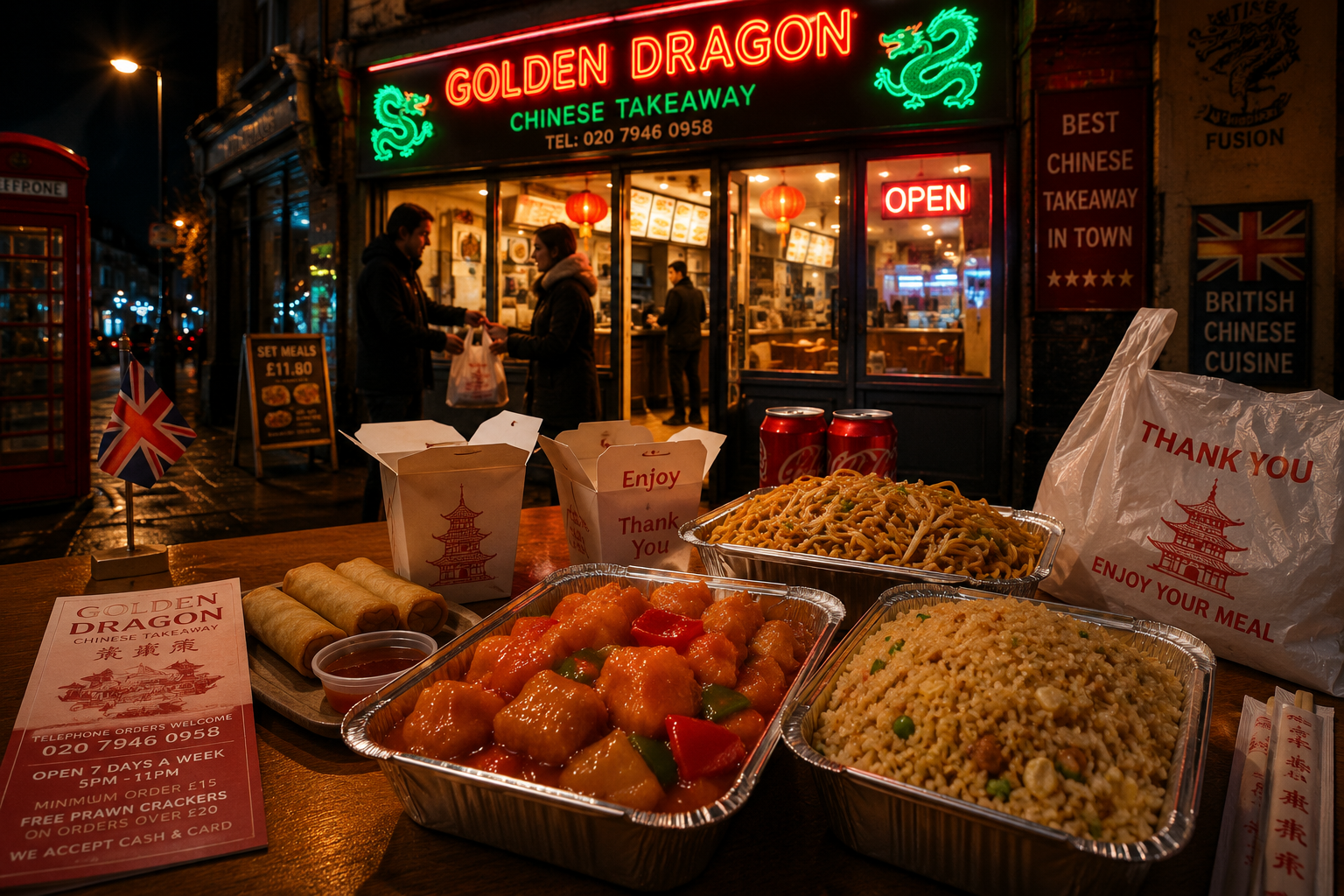
Some of the most iconic British Chinese food dishes have become household names in the UK. Sweet and sour chicken is one of the most famous, featuring crispy fried chicken coated in a tangy sauce. Chicken chow mein is another favorite, combining stir-fried noodles with vegetables and meat. Egg fried rice is a staple side dish that accompanies almost every meal. Other popular dishes include beef in black bean sauce, crispy shredded beef, and spring rolls. The “chicken balls” dish, often served with sweet and sour sauce, is especially popular in UK takeaways but is rarely found in traditional Chinese cuisine. These dishes are designed to be flavorful, filling, and easy to enjoy as a quick meal, making them ideal for takeaway culture.
Flavors and Cooking Style in British Chinese Food
The flavor profile of British Chinese food is quite distinct from authentic Chinese cuisine. It tends to be sweeter, less spicy, and more heavily sauced. Many dishes use deep frying as a cooking method to achieve a crispy texture, especially for meats like chicken and beef. Sauces such as sweet and sour, curry sauce, and soy-based gravies are widely used to enhance flavor. The cooking style prioritizes consistency and speed, allowing restaurants to serve large numbers of customers quickly. While traditional Chinese cuisine often focuses on balance and subtlety, British Chinese food leans toward bold and comforting flavors. This makes it particularly appealing to people looking for satisfying takeaway meals after work or on weekends.
The Role of Takeaway Culture in the UK
Takeaway culture plays a major role in the popularity of British Chinese food. Chinese takeaways are found in almost every town and city across the UK, often operating alongside fish and chip shops and pizza restaurants. These establishments are typically family-run businesses that offer affordable, quick meals for local communities. The tradition of ordering Chinese takeaway on weekends or special occasions has become deeply embedded in British lifestyle. Many people associate Chinese takeaway food with comfort, celebration, or social gatherings. The convenience of ordering food by phone or delivery apps has further strengthened this culture in recent years. As a result, British Chinese food is not just a cuisine but a part of everyday social life in the UK.
Influence of British Taste Preferences
The evolution of British Chinese food has been heavily influenced by local taste preferences. When Chinese immigrants first introduced their cuisine, many traditional dishes were too spicy or unfamiliar for British customers. To adapt, chefs began modifying recipes by reducing spice levels, increasing sweetness, and using more familiar ingredients. For example, dishes like chop suey and curry-flavored Chinese dishes were created specifically for British consumers. Over time, these adaptations became standardized and widely accepted. Even today, many British Chinese restaurants continue to adjust their menus based on customer expectations. This continuous adaptation shows how food culture evolves when it interacts with different societies.
Differences Between Authentic Chinese and British Chinese Food
There are significant differences between British Chinese food and authentic Chinese cuisine. Traditional Chinese food is highly regional, with each province offering distinct flavors, ingredients, and cooking methods. For example, Sichuan cuisine is known for its spicy and numbing flavors, while Cantonese cuisine focuses on freshness and light seasoning. In contrast, British Chinese food blends elements from different regions but simplifies them for mass appeal. Ingredients are often substituted based on availability, and cooking methods are adjusted for efficiency. While authentic Chinese food emphasizes balance and cultural heritage, British Chinese food prioritizes convenience and familiarity. Both styles have their own value, but they serve different audiences and cultural purposes.
Modern Trends in British Chinese Food
In recent years, British Chinese food has started to evolve again due to changing consumer preferences. Health-conscious diners are now looking for lighter options, leading some restaurants to introduce steamed dishes, reduced-sugar sauces, and vegetarian alternatives. Fusion cuisine is also becoming more popular, combining Chinese flavors with other global influences. Additionally, younger chefs are experimenting with more authentic regional Chinese recipes, introducing customers to new flavors beyond traditional takeaway menus. Social media platforms have also played a role in promoting food trends, with viral videos showcasing both classic and modern Chinese dishes. Despite these changes, traditional takeaway favorites remain extremely popular, showing that British Chinese food continues to balance tradition and innovation.
Cultural Importance of British Chinese Food in the UK
The cultural impact of British Chinese food goes beyond just eating habits. It represents the long history of Chinese communities in the UK and their contribution to British society. Chinese takeaways and restaurants have become community landmarks in many neighborhoods, often passed down through generations of families. The cuisine also reflects multicultural integration, where food becomes a bridge between different cultures. For many people in the UK, Chinese takeaway is associated with comfort, family gatherings, and social traditions. It has become a shared cultural experience that transcends ethnic boundaries, making it one of the most widely enjoyed cuisines in the country.
Conclusion
British Chinese food is a unique and evolving culinary tradition that reflects cultural adaptation, migration history, and changing consumer tastes. From its early origins in immigrant communities to its current status as a national takeaway favorite, it has become an essential part of UK food culture. While it differs from authentic Chinese cuisine, it has developed its own identity built on comfort, accessibility, and flavor. As modern trends continue to influence dining habits, British Chinese food is likely to evolve further while still maintaining its classic dishes that people know and love. It remains a powerful example of how food can connect cultures and create lasting traditions.