
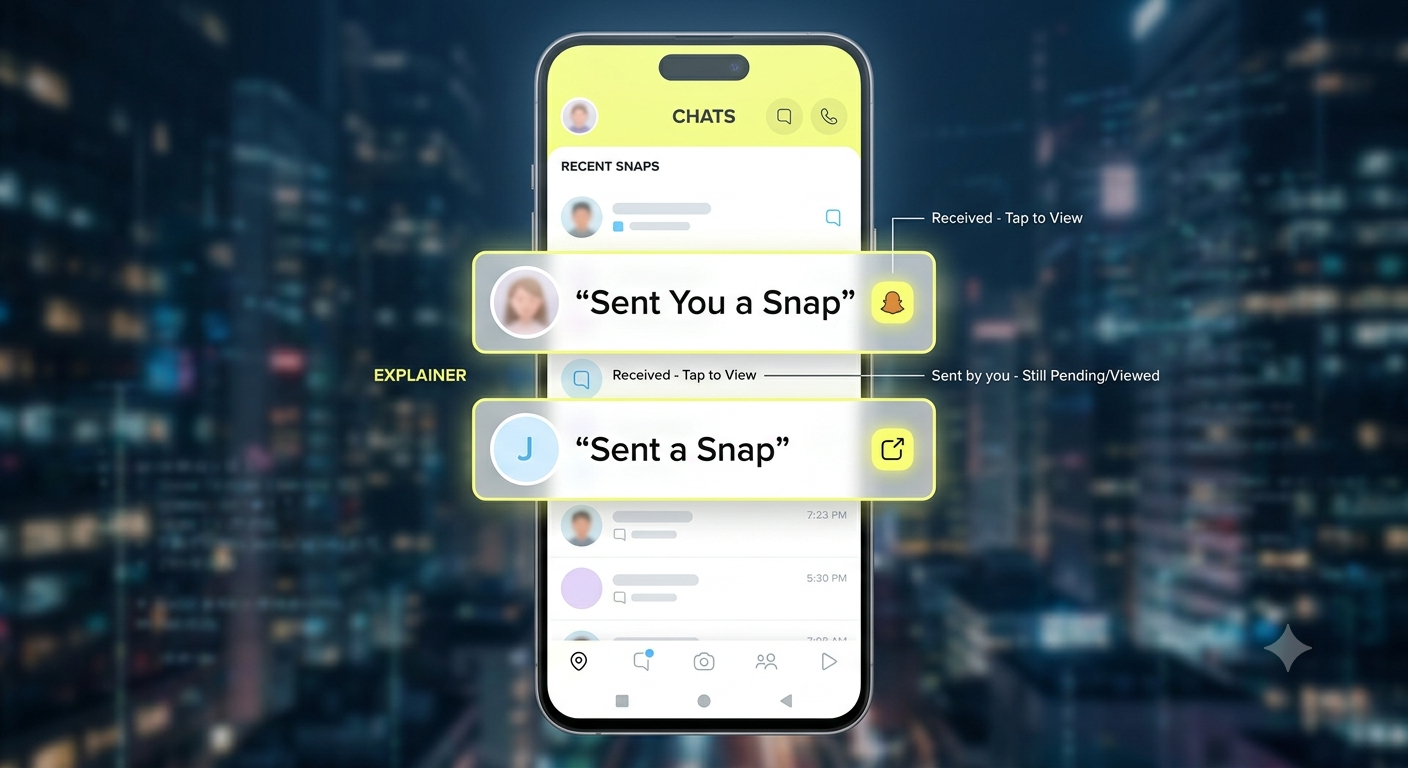

Snapchat Notifications Messages Explained
Snapchat has numerous kinds of notifications to tell users what is going on, especially when someone sends a snap. Two frequent words people see often are “Sent You a Snap” and “Sent a Snap”. At first glance these messages look identical, but they actually serve slightly varied objectives, depending on the context, the type of interaction, and the behaviour of the system. A lot of users are puzzled when they notice these variants since Snapchat doesn’t always do a good job of explaining the difference within the app itself. By understanding the meaning of each message, users may better perceive what is happening in their inbox, and minimise uncertainty about who is communicating with them and how.
The difference in notifications is part of Snapchat’s attempt to make communication simpler, yet still provide users with a timely update of new material. Snapchat is all about rapid, visual communicating, so even little phrasing alterations might alter how users view activities.
What Does Sent You a Snap Mean?
If you see “Sent You a Snap” on Snapchat, it generally signifies a certain individual has sent you a snap directly. Since this is a one-to-one contact, the snap is for your account only. This is not a global or group broadcast, but rather a direct message with a photo or video to be opened by you.
This message generally shows when someone clicks your name from his/her friends list and sends a snap privately. Snapchat . This is a very common form of communication . Basically , it means a direct interaction between two users . The use of “sent you” indicates personal targeting and makes it obvious the message is meant for the recipient personally.
What Does “Sent a Snap” Mean on Snapchat?
“Sent a Snap,” by contrast, is a more generic notice. So it means you have been snap chatted by someone but the phrase does not always read as direct targeting in the same manner. You see this a lot in group conversations or in the instance of Snapchat’s system that streamlines notification wording for uniformity.
The term also appears in conversation previews or notice summaries where the app doesn’t disclose all the facts. It still signifies that a snap has been sent but it may not always show if it is only to you or a part of a bigger interaction.
This means there are occasions when consumers may feel that “Sent a Snap” is not as personal yet, many times, it’s still direct communication.
The main difference between the two notifications
“Sent You a Snap” vs “Sent a Snap” The biggest difference between the two is the personalisation and context. “Sent You a Snap” is more particular and shows that a direct message was given to you specifically, not anybody else. On the other hand, “Sent a Snap” is a more generic notification type that can appear in a variety of scenarios, such as group interactions or streamlined system alerts.
Both alerts signify that a snap has been sent in the end, but the clarity level of the recipient varies. That’s why users might see both versions, depending on how the snap was sent, and how Snapchat decides to display the notice.
Why Snapchat Uses Different Language
Snapchat uses several notification styles to keep the user experience quick and basic. Millions of snaps are sent every minute and the app leans towards short and sweet. Depending on whether a snap is delivered privately, in a group or via chat integration, the phrasing could vary slightly.
Another source of diversity is interface optimisation. Snapchat is continually refreshing its design and notification system, and you may notice text alterations based on A/B testing, app versions, or platform updates. These changes are frequently minor, but they can confuse consumers who are unaware of continuing design tweaks.
How to Identify If a Snap Is Direct or Group-Based
One of the easiest methods to grasp the difference between notification types is to look at the conversation or inbox screen. When someone sends you a snap directly, it will typically show up in that person’s separate chat thread. If it is part of a group, it will be found within the group chat conversation.
Snapchat also uses visual signals like as symbols and conversation previews to help users understand where the snap is coming from. However, notification text can often be reduced, so always launch the app to confirm the actual context of the message.
Typical User confus.
There are many Snapchat users who do not know the difference between the two as they look remarkably similar. This confusion might develop when users are receiving many snaps simultaneously from different people, making it more difficult to distinguish who the communication is from.
Another confusing part is notification grouping on mobile devices. Notifications are commonly grouped together on smartphones, so a Snapchat message may look less comprehensive than it is. This leads to consumers thinking that “Sent a Snap” and “Sent You a Snap” are two different things, whereas they are actually very closely connected.
Can it impact snap viewing or privacy?
Both notifications are the same, no difference in privacy or seeing capabilities. The message says “Sent You a Snap” or “Sent a Snap” yet the snap itself is private and can only be seen by the intended recipient(s). Snapchat will nevertheless apply its regular privacy standards, including screenshot notifications, time limits and view tracking.
The language has no effect on how the snap works in the app. It just changes the way the notification is shown before you open content.
How Does Snapchat Notification System Work?
Snapchat’s notifications system is lightweight and instantaneous. Quick updates on messages, snaps, friend requests and story engagements. The system prioritises speed above extensive explanations, which is why the language may sometimes differ.
The notification format may fluctuate somewhat depending on your device, operating system and app version. Snapchat also does regular backend changes which can also affect the way messages are presented.
How to Not Get Confused With Snapchat Messages
Users should open the app instead of reading the lock screen message to avoid misunderstanding between the numerous Snapchat notifications. The in-app chat view is the most reliable way to see who sent what, and if it’s a direct or group snap.
Updating the app also helps to minimise anomalies in the language of notifications. Snapchat often releases updates that modify the way you message and correct display bugs.
End of the Line on Snapchat Notification Differences
The distinction between “Sent You a Snap” and “Sent a Snap” is primarily in the phrase and context, not the functionality. Both messages are informing you that you’ve gotten a snap, but “Sent You a Snap” is more personal and direct, and “Sent a Snap” can be more generic depending on the situation.
Knowing these subtle changes would help consumers understand Snapchat activities without any ambiguity. In most circumstances, both notifications will lead to the same action: opening a snap and seeing the material that someone else has shared.